
Is Mayonnaise Good or Bad for Baby Boomers?
For many baby boomers, mayonnaise is more than a condiment — it is comfort food. From tuna salad and BLTs to potato salad at summer cookouts, mayo has been a refrigerator staple for decades.
But today, many boomers wonder:
- Is mayonnaise unhealthy?
- Does mayo raise cholesterol?
- Is light mayo better?
- Should older adults switch to olive oil mayo?
- Is homemade mayonnaise safer or healthier?
- How much mayo is too much after age 60?
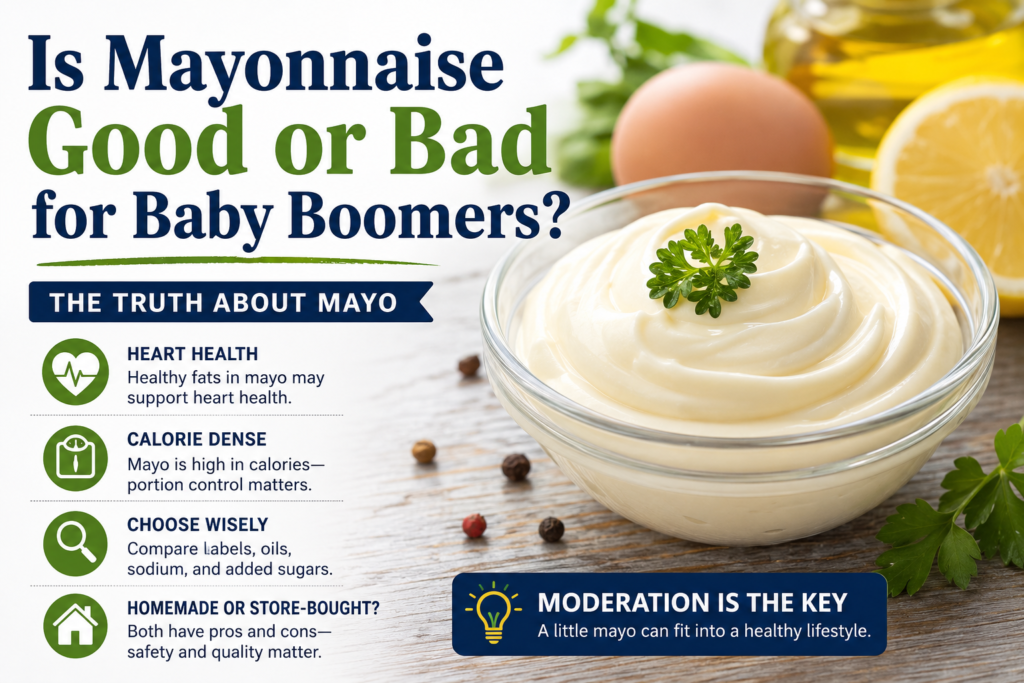
The answer is not as simple as “good” or “bad.” Like many foods, mayonnaise depends on the ingredients, the amount consumed, and your overall health profile.
Here is what boomers need to know.
What Is Mayonnaise Made Of?
Traditional mayonnaise contains:
- Oil
- Egg yolks
- Vinegar or lemon juice
- Seasonings
Commercial mayo is typically made with soybean oil or canola oil. Some premium brands now use olive oil or avocado oil.
According to the Mayo Clinic, unsaturated fats from plant oils can support heart health when they replace saturated fats like butter. (Mayo Clinic)
That means mayonnaise is not automatically unhealthy. In fact, some versions contain primarily unsaturated fats rather than saturated fats.
The Pluses of Mayonnaise for Baby Boomers
1. Mayo Contains Heart-Healthier Unsaturated Fats
Many traditional mayos are rich in polyunsaturated and monounsaturated fats.
According to the American Heart Association and the Mayo Clinic, replacing saturated fats with unsaturated fats may help improve cholesterol levels and support cardiovascular health. (Mayo Clinic)
For boomers concerned about heart disease, this matters.
Using a small amount of mayonnaise instead of butter-based spreads may actually be the better option.
2. Mayo Can Make Healthy Foods More Enjoyable
Let’s be realistic: dry sandwiches and plain vegetables are not exciting.
A modest amount of mayo can encourage people to eat:
- Tuna
- Salmon
- Chicken
- Vegetables
- Whole grain sandwiches
Nutrition experts often emphasize sustainability. If a tablespoon of mayo helps you eat more healthy foods, that can be a positive tradeoff.
3. Mayo Is Low in Carbohydrates
Most mayonnaise contains very few carbohydrates.
For boomers managing:
- Type 2 diabetes
- Prediabetes
- Blood sugar spikes
regular mayo usually has little effect on blood glucose.
4. Olive Oil and Avocado Oil Mayos Offer Better Fat Profiles
Newer mayonnaise products made with olive oil or avocado oil may provide additional benefits.
These products often contain more monounsaturated fats, which are associated with heart health.
Popular brands include:
These versions tend to appeal to boomers following Mediterranean-style diets.
The Downsides of Mayonnaise for Older Adults
1. Mayo Is Calorie Dense
This is the biggest issue.
One tablespoon of regular mayonnaise typically contains around 90 to 100 calories.
That may not sound like much — until two tablespoons become four.
For boomers trying to:
- lose weight,
- reduce belly fat,
- improve blood sugar,
- or lower cardiovascular risk,
portion size matters enormously.
As nutrition experts often say, “The dose makes the poison.”
2. Some Mayo Contains High Sodium
Certain brands — especially flavored varieties — can contain significant sodium.
Too much sodium may worsen:
- high blood pressure,
- fluid retention,
- and cardiovascular risk.
According to the Mayo Clinic Health System, sodium reduction remains important for blood pressure control in older adults. (Mayo Clinic Health System)
Boomers should always read labels carefully.
3. Some “Light” Mayos Add Sugar and Additives
Light mayonnaise sounds healthier — and sometimes it is.
But not always.
Many light mayos reduce fat while adding:
- sugar,
- starches,
- gums,
- or artificial ingredients to improve texture.
That means:
- fewer calories,
- but sometimes more processed ingredients.
Some nutrition-conscious consumers report that light mayo tastes sweeter because manufacturers compensate for reduced fat. (Reddit)
The key is comparing labels rather than assuming “light” automatically means healthier.
Is Light Mayo Better for Boomers?
The answer depends on your goals.
Light Mayo May Be Better If You:
- are trying to lose weight,
- need to reduce calories,
- use large amounts of mayo,
- or have been advised to limit fat intake.
Regular Mayo May Be Better If You:
- prefer cleaner ingredients,
- follow lower-carb diets,
- dislike added sugars,
- or use small portions anyway.
For many boomers, the smartest compromise is:
- using regular mayo,
- but using less of it.
What About Generic or Store-Brand Mayo?
Many private-label or generic mayos are surprisingly similar to name brands.
In fact, some are produced in the same manufacturing facilities.
However, boomers should compare:
- sodium levels,
- oil type,
- sugar content,
- and ingredient quality.
Cheaper mayos may use:
- lower-cost oils,
- more preservatives,
- or additional stabilizers.
That does not automatically make them unhealthy — but labels matter.
A smart shopper should focus more on the ingredient list than the logo on the jar.
Should Boomers Make Homemade Mayo?
Homemade mayo has pros and cons.
Benefits of Homemade Mayo
You control:
- the oil,
- sodium,
- additives,
- and flavor.
Many boomers prefer homemade mayo using:
- olive oil,
- avocado oil,
- fresh lemon juice,
- and cage-free eggs.
Homemade mayo can taste fresher and cleaner than commercial versions.
Risks of Homemade Mayo
The biggest concern is food safety.
Traditional homemade mayo often uses raw eggs.
For older adults, foodborne illness risk is more serious because immune systems weaken with age.
If making homemade mayo:
- use pasteurized eggs,
- refrigerate immediately,
- and consume quickly.
Commercial mayo is generally safer because it uses pasteurized ingredients.
So… Is Mayo a “Good Food” for Boomers?
Mayonnaise is neither a miracle food nor a dietary villain.
For most healthy boomers, moderate mayo consumption is perfectly reasonable.
The bigger issue is:
- overall diet quality,
- portion control,
- and what mayo is paired with.
A turkey sandwich on whole grain bread with lettuce and a light spread of mayo is very different from:
- fried foods,
- processed meats,
- and oversized deli sandwiches loaded with mayonnaise.
Context matters.
How Much Mayo Should a Baby Boomer Eat?
Most nutrition experts would consider:
- 1 to 2 tablespoons occasionally
to be a reasonable serving size for most adults.
Boomers with:
- heart disease,
- obesity,
- diabetes,
- or high blood pressure
should discuss fat intake and calorie goals with their healthcare provider.
A practical guideline:
- treat mayo as a condiment, not a main ingredient.
Smart Mayo Tips for Boomers
Best Practices
✔ Choose mayo made with olive or avocado oil when possible
✔ Watch serving sizes carefully
✔ Read sodium and sugar labels
✔ Refrigerate mayo-based salads promptly
✔ Use mayo to support healthier meals, not ultra-processed foods
Avoid
✘ Eating mayo-heavy processed deli foods frequently
✘ Oversized restaurant portions
✘ Assuming “light” always means healthier
✘ Leaving mayo dishes unrefrigerated outdoors
Final Thoughts
For baby boomers, mayonnaise can absolutely fit into a healthy lifestyle — if used wisely.
The healthiest approach is moderation, label reading, and focusing on overall dietary patterns rather than demonizing one food.
As researchers and organizations like the Mayo Clinic continue to emphasize, healthy fats can play an important role in long-term heart health when they replace saturated fats. (Mayo Clinic)
In other words:
A little mayo is probably not your biggest health problem.
But half a cup of it every day probably is.
Suggested Internal Links for Smarter Boomer SEO
- “Best Heart-Healthy Foods for Baby Boomers”
- “The Truth About Eggs After 60”
- “How Much Fat Should Seniors Eat?”
- “Mediterranean Diet Tips for Boomers”
- “Best Sandwiches for Older Adults”